Professional movers handle moving in cold or rainy weather through advance planning, moisture-resistant packing, and active floor and crew protection throughout the process. Movers who prepare their materials, trucks, and crews in advance keep belongings dry and timelines on track, even when conditions turn difficult.
Weather creates conditions to manage. Unprepared moves create the real risk in cold or rainy weather.
Professional movers treat cold and rainy weather as a standard condition on the calendar. From how items get wrapped to how trucks get staged and crews get briefed, cold and rainy conditions trigger a different playbook. That playbook protects people, property, and schedules. Here’s what experienced professionals do differently when the forecast turns rough, and why it matters for your move. For broader precautions, see our guide to Winter Moving Tips: How to Safely Relocate in Cold Weather.
How Do Movers Plan for Bad Weather Before Move Day?
A professional move in poor weather does not begin when the truck arrives. Planning starts days, sometimes weeks, earlier and accounts for precipitation, temperature, and site access.
Dispatch teams monitor forecasts and flag moves that may need extra materials, longer load windows, or alternative parking plans. Crews learn about specific site risks, such as sloped driveways, narrow staircases, or shared building entrances that turn slippery when wet. This planning keeps the move controlled even when conditions worsen.
Alliance Relocation Services offers custom crating and specialty moving services.
What Packing Materials Protect Items From Moisture and Cold?
Rain and cold expose the biggest weakness in DIY moving: ordinary cardboard and plastic wrap. Professional movers choose materials that withstand moisture, pressure, and temperature swings.
Commercial-grade materials resist saturation and tearing better than consumer packing supplies. Furniture gets wrapped in layered systems that shed water rather than absorb it. Sensitive items get insulated against cold air during transport.
Key packing materials professional movers rely on:
- Heavy-duty, double-walled cartons that hold their shape in humid conditions
- Water-resistant furniture pads paired with stretch wrap for a sealed barrier
- Plastic bins or specialized crates for electronics, artwork, and documents
This approach prevents the two most common weather-related issues: warped furniture and collapsed boxes. Items that arrive dry and intact make unpacking routine work instead of damage control. For more on protecting sensitive belongings, see Winter Moving Tips: How to Protect Your Furniture, Electronics, and Fragile Items in Cold Weather.
How Do Movers Protect Floors and Entryways in Wet Weather?
One overlooked risk of rainy or cold moves is damage to the property itself. Wet shoes, dollies, and furniture legs can ruin flooring, stain carpets, or scuff walls quickly, especially in apartments or shared spaces.
Professional movers lay down temporary floor runners and corner guards before loading begins. These barriers absorb moisture, improve traction, and protect high-traffic areas through the move. Crews manage entryways carefully so doors stay open only as long as needed, limiting exposure to cold air and rain.
This protection goes beyond courtesy. It reduces liability, prevents delays caused by accidents, and helps clients avoid unexpected repair costs after the move.
How Are Moving Trucks Loaded in Rain or Cold?
In rainy or cold weather, loading a truck becomes a precision task. Movers do not simply stack items by size or weight. They arrange items to control airflow, prevent shifting, and isolate moisture-sensitive belongings.
Professionals stage the truck so items that must stay driest get loaded first and sealed deeper inside the cargo area. Mats and absorbent layers sit near entry points, and crews open and close doors deliberately to limit rain exposure.
Cold weather adds another layer of complexity. Materials like wood, leather, and electronics can suffer damage from rapid temperature changes. Experienced movers manage this by limiting how long items stay outside and positioning them in the truck to reduce cold exposure.
How Do Moving Crews Stay Safe in Wet or Icy Conditions?
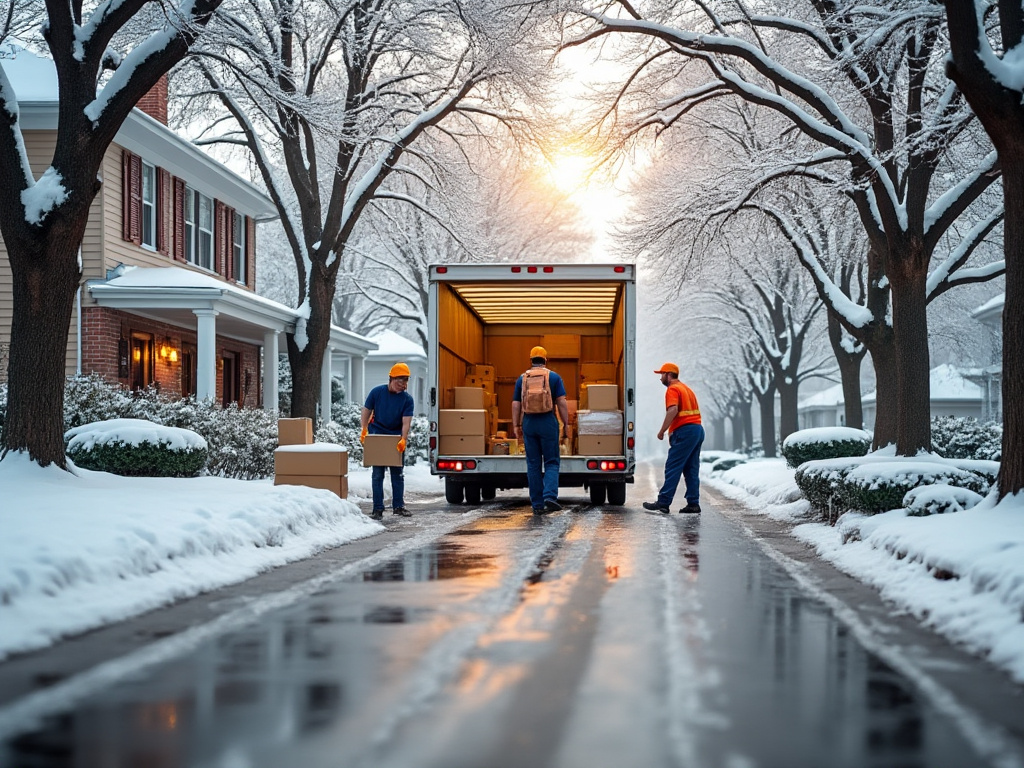
Professional movers protect people as well as belongings. Slips and falls rank among the biggest risks during wet or icy moves, so seasoned crews adjust their pace and techniques.
Crews choose footwear, gloves, and equipment for traction and grip. Workers wipe down dollies regularly, and handoffs get coordinated to avoid sudden movements on slick surfaces. In extreme conditions, crew leaders may adjust staffing levels to keep control without rushing.
Weather-specific safety practices:
- Slower load and unload pacing to reduce accident risk
- Frequent checks of ramps, steps, and walkways for moisture buildup
- Team lifting protocols for heavy items instead of solo carries
This disciplined approach keeps workers safe and prevents the rushed mistakes that lead to injuries or damaged property.
Why Do Winter Move Schedules Include Extra Time?
Rain and cold can slow even the best-run moves. Professional companies plan for that reality instead of guessing. Move schedules in winter months often include buffer time so crews avoid cutting corners.
Clients benefit from realistic timelines that account for weather-related delays without turning into all-day marathons. When weather worsens unexpectedly, dispatch teams can adjust arrival windows, add resources, or shift routes to keep the move on track.
This flexibility marks experienced movers and sets them apart from bargain services that overbook and underdeliver. For a step-by-step look at winter preparation, read Cold Weather, Smooth Moves: How to Prepare for a Winter Relocation.
How Do Movers Communicate When Weather Changes?
Bad weather raises stress, which makes clear communication more important than ever. Professional movers maintain open contact before and during the move so clients know what to expect if conditions shift.
Reputable companies explain how weather may affect timing, access, or packing procedures instead of leaving customers guessing. That transparency builds trust and lets clients prepare, whether that means clearing a driveway, reserving covered parking, or adjusting building access times.
Why Does Weather-Resistant Moving Matter?
A move gone wrong in bad weather can create lasting damage. Waterlogged furniture, cracked wood from cold exposure, or injuries from slips can turn a transition into an expensive setback.
Professional movers treat rain and cold as manageable variables rather than excuses. Their systems, materials, and training deliver consistent results regardless of conditions, whether the move happens in the United States or Canada. Clients gain confidence and a smoother transition even when the weather refuses to cooperate.
Ready to plan a weather-ready move? Request a quote from a team that plans for rain and cold.
Why Does Experience Make the Difference in Bad Weather Moves?
Anyone can move boxes on a sunny day. A successful move in cold or rainy weather takes experience, planning, and discipline.
From moisture-resistant packing to safety-driven crew protocols, professional movers operate differently because conditions demand it. Choosing a team that understands weather-specific challenges matters most during winter or early spring moves. The right preparation helps belongings arrive dry, intact, and on schedule, no matter what the forecast says.
Frequently Asked Questions
Does rain actually damage moving boxes?
Yes. Ordinary cardboard absorbs moisture and can collapse under weight, so professional movers use heavy-duty, double-walled cartons instead.
Can movers work safely on icy driveways?
Yes. Crews wear footwear and gloves chosen for traction, slow their pace on wet surfaces, and check ramps and walkways for moisture buildup.
Will a winter or rainy move take longer than usual?
Winter schedules often include buffer time to account for weather-related delays. This gives clients realistic timelines instead of rushed, pressured work.
How do movers protect electronics from cold temperatures?
Movers position moisture-sensitive items deeper in the truck, limit how long they sit outside, and insulate them against cold air during transport.
Do professional movers protect floors during a move?
Yes. Crews lay down temporary floor runners and corner guards before loading begins to reduce moisture damage and improve traction.