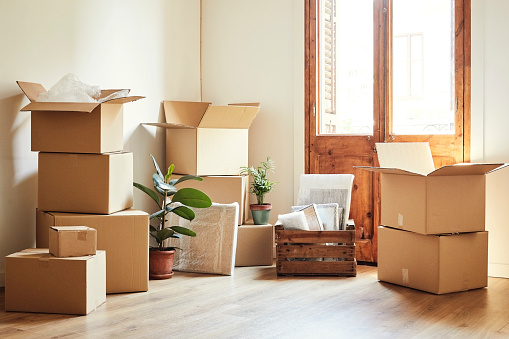
How many moving boxes do you need? Most homes need a mix of small, medium and large boxes. The box count depends on your home’s size, so check the counts listed below. The exact count depends on your belongings, your home’s room count and your household size.
What’s the First Step in Estimating Moving Box Needs?
Sort your belongings before you count boxes. Decide what moves with you and what goes to resale shops, garage sales or donation. Check all closets, cabinets and drawers, plus the basement, attic and garage. Clearing items out first makes the rest of your count easier.
For more tips on tackling a packed garage before a move, see Packing Your Garage for a Move.
How Do Room Count and Family Size Change Your Box Total?
Count your rooms and family members before buying boxes. Larger households and larger homes both mean more belongings to pack. A well-stocked kitchen with several sets of dishware needs more medium boxes than a basic setup. A large book collection calls for plenty of small boxes, since books add weight fast.
Do You Need Specialty Boxes for TVs, Mirrors and Artwork?
Count flat-screen TVs, large mirrors and framed artwork, since these need specialty boxes sized for their shape. A wardrobe box lets adults in your household pack hanging clothes without taking them off the hangers.
See Packing Fragile Items. Alliance Relocation Services offers a full list of specialty moving services for people who are moving and want extra hands with crating, TV packing or furniture disassembly.
Why Are Smaller Boxes Better Than Large Ones for Moving?
Pack in smaller boxes whenever you can, since boxes quickly grow too heavy to carry once full. Plan on needing more small and medium boxes than large ones for almost any move.
How Many Boxes Do You Need Based on Home Size?
Box counts vary by home size and how much you have. Use these numbers as a starting point:
- One-bedroom home or apartment: 8 to 12 small boxes, 8 to 12 medium boxes and 2 to 4 large boxes.
- Two to three bedroom home (a typical family size): 10 to 20 small boxes, 15 to 25 medium boxes and 8 to 10 large boxes.
- Larger homes and multi-generational families: 20 to 30 small boxes, 20 to 30 medium boxes and 15 to 20 large boxes.
Is It Better to Overestimate or Underestimate Your Box Count?
Many people underestimate how many boxes they need, while others buy too many. Overestimating works out better than underestimating, since finding extra boxes the night before your movers arrive is a hassle. Start with the smaller quantity from the list above, then plan a second run for more boxes if you run out.
When Should You Call for Moving Help?
Alliance Relocation Services can provide a quote by phone or through our quote form. Weighing the time and energy a DIY move takes often makes Alliance Relocation Services a cost-effective choice. Alliance serves customers across the United States and Canada. Request a quote to compare your options.
Frequently Asked Questions
What size boxes should you buy the most of?
Plan on buying more small and medium boxes than large ones. Large boxes grow too heavy to carry once they’re packed full.
Should you check the basement, attic and garage when counting boxes?
Yes. These areas often hold items people forget about, so checking them first gives a clearer picture of your total box count.
What does a wardrobe box do for hanging clothes?
A wardrobe box lets hanging clothes be packed without taking them off the hangers.
What should you do if you run out of boxes before your move?
Start with the smaller quantity from the list above, then plan a second run for more boxes if you run out.