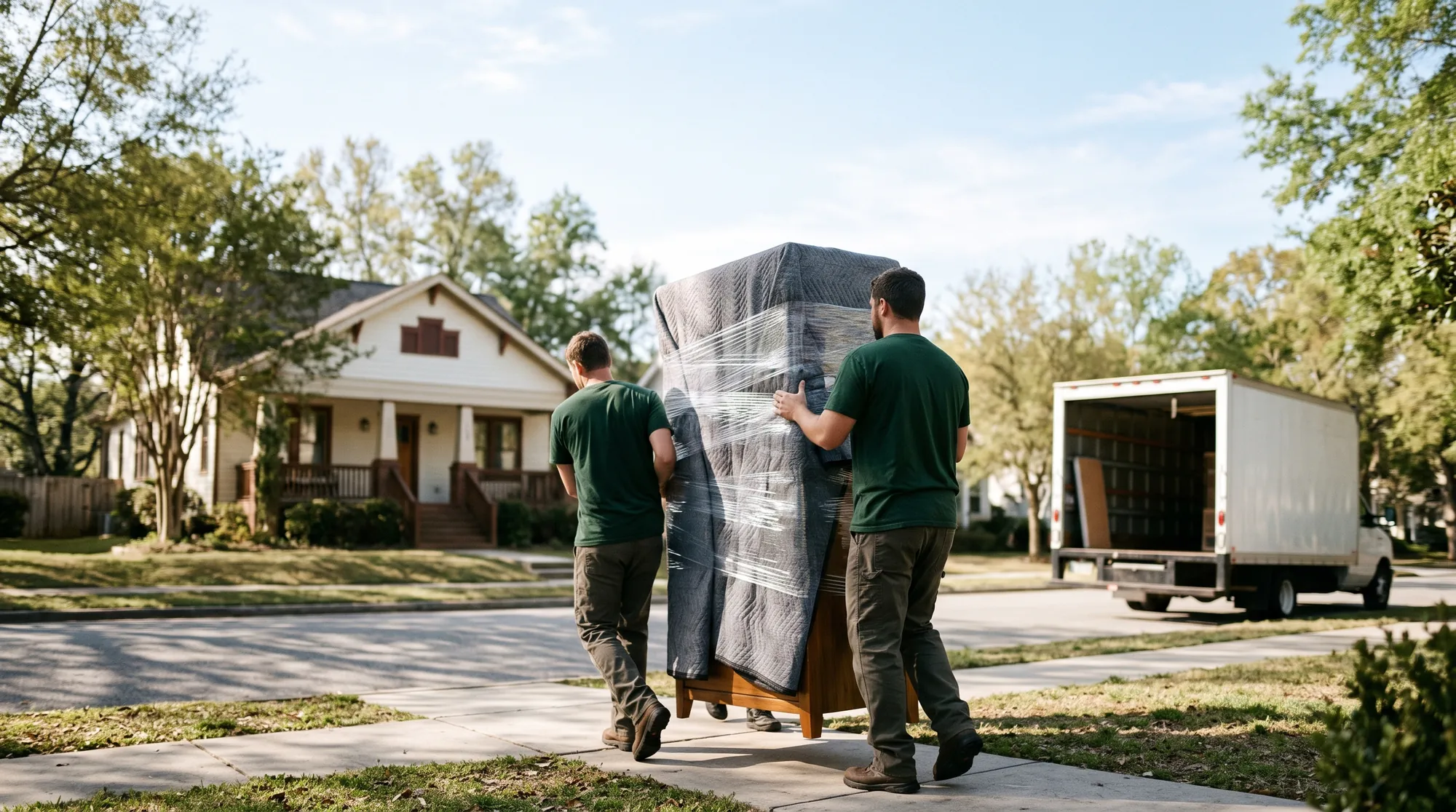

Protect floors during a move by covering them before furniture moves through, using rubber-wheeled dollies instead of dragging items, and measuring doorways and hallways in advance. Checking the weather also helps keep floors dry and safe. These steps help avoid scratches, dents, and costly repairs on moving day.
How can you protect your floors during a move?
Moving furniture and boxes can scratch, dent, or stain floors fast. Covering floors, moving items carefully, and planning ahead all help protect this valuable part of your home. The tips below help keep floors safe during a move.
How do you cover floors during a move?
Covering floors is the best way to protect them during a move. Several options work well:
- Linens you already have, like towels, sheets, or blankets.
- Broken down cardboard boxes.
- Commercial floor coverings made for this purpose, found at most hardware stores.
Secure any covering tightly with tape so it doesn’t become a tripping hazard. Check on it throughout the move, and fix it right away if it comes loose.
How do you move furniture without damaging floors?
Avoid dragging furniture across floors. Dragging or sliding even light furniture can scratch, mark, or dent flooring, especially if dust or debris gets caught underneath.
Heavy furniture needs felt pads to move safely over delicate floors. See Don’t Be That DIY Fail Meme: How Professional Movers Save Your Sanity (and Stuff!).
A rubber-wheeled dolly also helps protect floors. It carries several items at once and works well for large or heavy pieces. If you rent one, choose rubber wheels, since harder wheel materials can leave dents, scratches, or scuffs.
How do you prepare floors before moving day?
A few preparations before moving day help protect floors later.
- Measure furniture, doors, hallways, and stairwells before the move. Tight spots slow down moving day and raise the risk of floor damage. Check doorframes, corners, stairways, and room sizes that look narrow.
- Check the weather before your move. Rain or snow can make floors wet and slippery, raising the risk of slips or dropped items. If bad weather is unavoidable, cover floors, wear proper safety gear, and plan extra time.
Why hire professional movers to protect your floors?
Covering floors and good furniture moving habits help a lot, but professional movers add another layer of protection. Alliance Relocation Services provides furniture disassembly and reassembly for beds, desks, and other large pieces. See Alliance Relocation Services’ full list of specialty moving services for options at your next move.
Alliance Relocation Services works alongside moving companies across the United States and Canada.
See The Joy of Moving to a New Home.
Request a quote from Alliance Relocation Services for its specialty moving services.
Frequently Asked Questions
What is the best way to cover floors during a move?
Cover floors with towels, sheets, blankets, broken down cardboard, or commercial floor coverings from a hardware store. Secure the covering tightly with tape so it doesn’t shift or trip anyone during the move.
Why shouldn’t you drag furniture across floors?
Dragging or sliding furniture, even light pieces, can scratch, mark, or dent flooring. Dust or debris caught underneath the furniture makes the damage worse.
Does weather affect floor protection during a move?
Yes. Rain or snow can make floors wet and slippery, raising the risk of slips or dropped items during the move.
Can professional movers help protect floors during a move?
Yes. A professional moving company can provide felt pads, and Alliance Relocation Services handles furniture disassembly and reassembly.